24 January 2014

Zax Attack


Welp, the rumor mill came through, and the Big Z did indeed announce new products yesterday, along with some new firmware goodness.


The new TRXLA2 transmitter:


The new QRX200 receiver:


(These are the base models; stereo transmitters will also be available, as well as a QRX with an IFB option). 

The Zaxcom kids got out of the office for a field trip to demo the new units' performance. Please to enjoy:


The new modulation scheme promises longer range even for legacy units. This is a big deal, and a promising direction for the industry. The demands on field mixers increase constantly, from higher track counts to rather unrealistic demands for distance between crew and moving talent. Allowing owners who have made significant investments in their gear to benefit from the new software without having to upgrade the entire unit is quite refreshing.

The other eyebrow-raiser is the fact that the new model line offers “tuneable tracking front end”, essentially making each unit capable of covering over three frequency blocks, rather than the standard single block. In addition to the channels available in each block, this offers unprecedented frequency agility. If you often find yourself in an RF-constipated environment, being able to hop blocks could be a lifesaver.


The "Jackie Chan of Wireless", if you will...


Zaxcom is doing soft launch of their new website, and you can see a preview of that at the link below. Until then, Gotham Sound is the main source for specs and info.

http://zaxcom.net/preview/

https://www.gothamsound.com/search/field_manufacturer/Zaxcom-70

13 January 2014

Shake, Rattle and Roll Redux

The Ktek Nautilus Follow Up

After the my initial review of the Ktek Nautilus suspension, several readers noted that they did not have the same experience with their Nautili, and Dave Fisk graciously offered to send another review sample. I recreated the setup, using the same gear and parameters as before. Here is the new batch of test files:


As before, there is a pervasive, low level ticking in the new Nautilus sample. To be fair, this is a torture test, pushing both suspensions beyond a common use scenario. Any competent boom op will swing a mic with far more grace than that, and even an ENG mixer booming with one hand will not likely ever induce the amount of vibration that I was during the test. I'm sure that the satisfied owners of the Nautilus are operating their booms sensibly, and enjoying good results.

But what about the more rough-and-tumble gigs, like back-pedaling and booming over uneven ground? In that situation, you're watching several things at once, and you don't want to have to worry about handling noise if you can help it. If one product can audibly out-perform another, especially at a lower cost, then is there even a contest?

[Disclosure: while I am loaned samples of gear for review, they are returned after the fact (or purchased at retail price). I do not receive any compensation for my reviews, other than the many beers I buy myself after I post. ]


I earned it.


10 January 2014

The D Stands For Depressing


Sonicpool Post has, for some reason, developed and released a free iOs app called Guerrilla ADR, which, according to the press release, “gives talent the ability to download the...app, put on a pair of headphones and record their ADR lines in sync with picture. They can preview a video clip of the line along with a text description of the line below it."


Hopefully the next version has an undershirt filter.

Where to begin...[sips coffee, grinds teeth]

Feedback. Placing an actor in charge of their own session without live direction will more than likely result in more notes and more re-takes. More time=more money.

The environment. Unless the actor has their own VO booth (or even a well-stocked walk-in closet), the background will be less-than-ideal at best, and a complete cluster at worst. This is a even more vexing when you consider that they’re likely doing ADR because the background was too noisy to begin with.

Finally, the mic. By design, it’s intended to be used for telephone calls. Because it’s a telephone. That’s kind of, you know, what’s it meant to be, and all.

Unless this is intended to record temp tracks as placeholders for the edit, I can’t see this being useful in a professional capacity. Unless, of course, the idea is that they encourage clients to use this to “save money”, then end up charging OT to fix the tracks because the talent gave them poor-quality deliverables. In which case, JEANYUS.

Link to the PR.

31 December 2013

Sampler Platter


While many different sampling rates have existed over the years, the most common we encounter are 44.1 kHz and 48 kHz. Both are more than capable of fully capturing the entirety of a microphone’s signal, but one is more or less reserved for pro audio and the other for digital video. But which one for which, and why?


It was the other great debate of its day...


As it turns out, both of these particular audio specs are derived from video:


“In the early days of digital audio research, the necessary bandwidth of about 1 Mbps per audio channel was difficult to store. Disk drives had the bandwidth but not the capacity for long recording time, so attention turned to video recorders. These were adapted to store audio samples by creating a pseudo-video waveform which would convey binary as black and white levels. The sampling rate of such a system is constrained to relate simply to the field rate and field structure of the television standard used, so that an integer number of samples can be stored on each usable TV line in the field. Such a recording can be made on a monochrome recorder, and these recording are made in two standards, 525 lines at 60 Hz and 625 lines at 50 Hz. Thus it is possible to find a frequency [44.1 kHz] which is a common multiple of the two and is also suitable for use as a sampling rate.”


One such combo unit was the Sony PCM-1600, coupled with a Beta or Umatic ¾-inch tape transport, which converted and recorded two 44.1 KHz, 16-bit channels:

That, or it was an ICBM launch panel...


Other units could also be coupled to a smaller Beta deck. With the adoption of the Red Book standard  for the Compact Disc, 44.1 kHz was cemented as the rate most commonly used for pro audio.


So how did 48 end up with video? Even more convoluted math:


“Yaaaaaaaggghhhh!” - Me


“Many in the U.S. television industry liked 60 kHz as a standard sample rate because it was free of leap frames and split frequencies, and it synchronized readily with all timing signals used in 60 Hz and 50 Hz television systems, 24 Hz film and the 13.5 MHz component digital video sample rate. The professional audio industry, however, considered it wastefully high, and there was a quantity of 48 kHz software extant in Europe…


48 kHz was readily derived by frequency division from standard input frequencies that are used to derive television frequencies, and it readily synchronized with all video signals. It further bore a simple relationship with the 32 kHz BBC/EBU sample rate, and it enjoyed widespread use in Europe.”


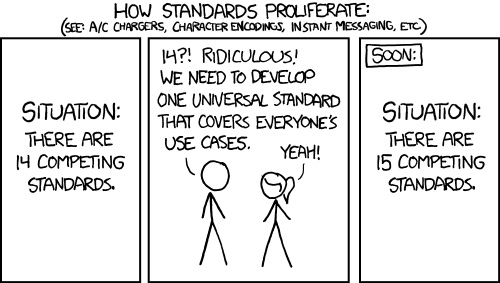
So there you have it, in a very complex and meandering nutshell. In attempting to standardize digital audio in its myriad applications, they created a handful more. As usual:


Links:


16 December 2013

Xylophone Lumbar Raspberry

The production world is fraught with myriad tales of gear etymology. If you were to ask someone what BNC stands for prior to Wikipedia, you'd get at least two seemingly plausible answers.  So it goes with the venerable XLR.

Not a rocket nozzle.

Whereas we mixers might have once believed that it stood for its pin outs ("ground, lead, return"), we now know that it is the catalogue code for the Cannon Connector:

"Originally manufactured as the Cannon X series, subsequent versions added a locking mechanism (Cannon XL) and then surrounded the female contacts with rubber polychloroprene insulation, which extended the part number prefix to XLR."
So there you have it, sports fans. You're all slightly smarter within a very narrow scope of knowledge. Don't say I'm not a giver.


19 November 2013

Sound Devices Intros Wee 633


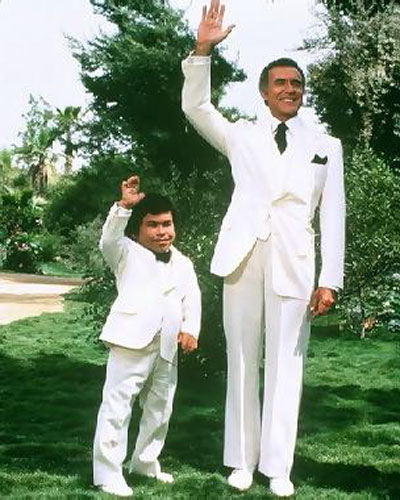
Sound Devices pulled away the satin cover today to reveal the 633 mixer/recorder. Like a Herve Villechaize to the 664’s Ricardo Montalban, it looks like a truncated, but nearly identical, version of the larger model.


“Smiles, everyone, smiles!”


From glancing at the marketing material, it looks like it could fully replace the 302 and the 744T, making it ostensibly a good choice for an entry-level or secondary use (car rig, etc) purchase:


Trew Audio let their fingers do the walking in their own into video, and they raise a valid point about the smaller faders for channels 4-6. Until I can get a review sample to do some finger-mashing of my own, I’ll have to take their word on it:


Don't Cross the Streams

Sound Devices will be launching a new product this morning, and will be live streaming the release from Trew Audio in L.A. beginning at 9:30 am PST :


Watch live streaming video from trewaudio at livestream.com